Big Horses are a Very New Thing and they Likely Didn’t Exist in your Historical and/or Fantasy Settings.
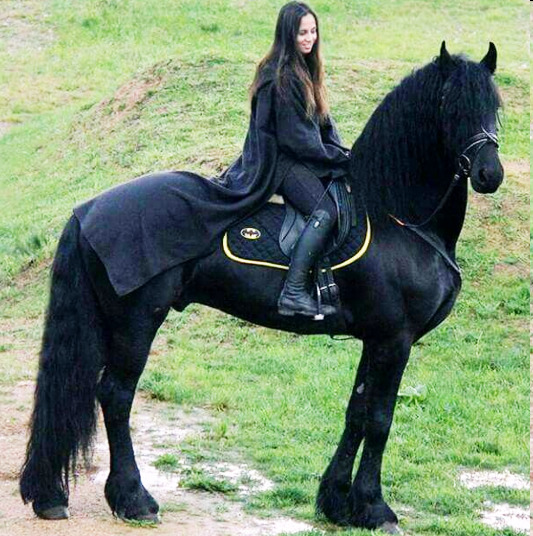
You’ve all seen it in every historical piece of media ever produced. Contrary to popular belief, a big black horse with long legs and long flowing mane is not a widespread or even a particularly old type of horse.
THIS IS NOT A MEDIEVAL THING. THIS IS NOT EVEN A BAROQUE THING. THIS IS A NINETEENTH CENTURY CITY CARRIAGE HORSE.
All the love to fancy Friesian horses, but your Roman general or Medieval country heroine just really couldn’t, wouldn’t, and for the sake of my mental health shouldn’t have ridden one either.
Big warmblood horses are a Western European and British invention that started popping up somewhere around 1700s when agriculture and warfare changed, and when rich folks wanted Bigger Faster Stronger Thinner race horses. The modern warmblood and the big continental draught both had their first real rise to fame in the 1800s when people started driving Fancy Carriages everywhere, and having the Fanciest Carriage started to mean having the Tallest and Thinnest Horses in the town.
Before mechanised weaponry and heavy artillery all horses used to be small and hardy easy-feeders. Kinda like a donkey but easier to steer and with a back that’s not as nasty and straight to sit on.
SOME REAL MEDIEVAL, ROMAN, OTTOMAN, MONGOL, VIKING, GREEK and WHATEVER HISTORICALLY PLAUSIBLE HORSES FOR YOU:
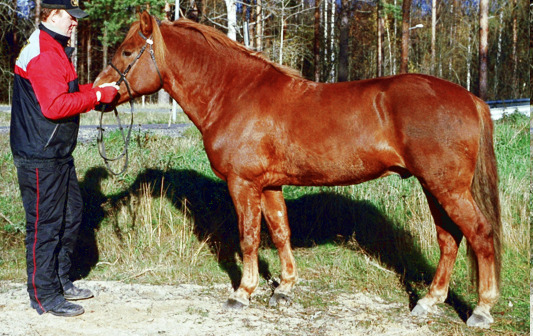
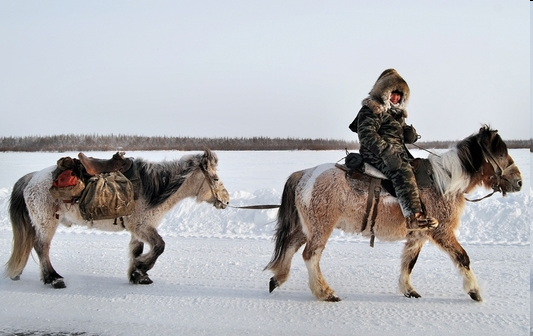
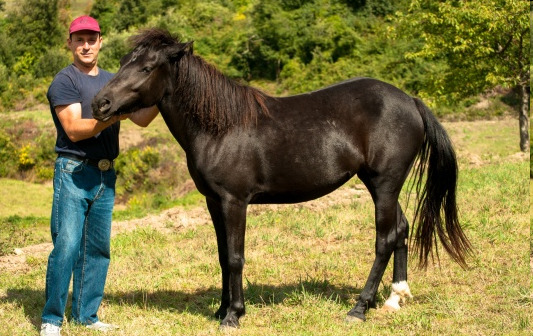
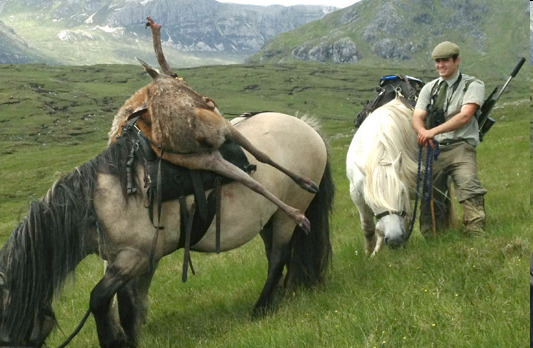
“Primitive”, native breeds all over the globe tend to be only roughly 120-140 cm (12.0 – 13.3 hh) tall at the withers. They all also look a little something like this:
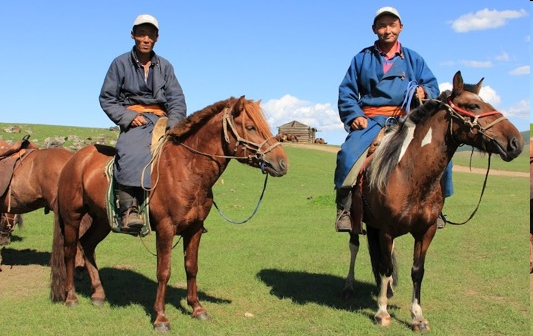
Mongolian native horse (Around 120-130 at the withers, and decendants of the first ever domesticated horses from central Asia. Still virtually unchanged from Chinggis Khan’s cavalry, ancestor to many Chinese, Japanese and Indian horses, and bred for speed racing and surviving outdoors without the help of humans.)
Carpathian native horse / Romanian and Polish Hucul Pony (Around 120-150 at the withers, first mentioned in writing during the 400s as wild mountain ponies, depicted before that in Trajanian Roman sculptures, used by the Austro-Hungarian cavalry in the 19th century)
Middle-Eastern native horse / Caspian Pony (Around 100-130 at the withers, ancestor of the Iranian Asil horse and its decendants, including the famous Arabian and Barb horses, likely been around since Darius I the Great, 5th century BC, and old Persian kings are often depicted riding these midgets)
Baltic Sea native horse / Icelandic, Finnish, Estonian, Gotland and Nordland horses (Around 120-150 at the withers, descendant of Mongolian horses, used by viking traders in 700-900 AD and taken to Iceland. Later used by the Swedish cavalry in the 30 years war and by the Finnish army in the Second World War, nowadays harness racing and draught horses)
Siberian native horse / Yakutian pony (Around 120-140 at the withers, related to Baltic and Mongolian horses and at least as old, as well-adapted to Siberian climate as woolly mammoths once were, the hairiest horse there is, used in draught work and herding)
Mediterranean native horse / Skyros pony, Sardinian Giara, Monterufolino (Around 100-140 at the Withers, used and bred by ancient Greeks for cavalry use, influenced by African and Eastern breeds, further had its own influence on Celtic breeds via Roman Empire, still used by park ranger officers in Italy)
British Isles’ native horse / various “Mountain & Moorland” pony breeds (Around 100-150 at the withers, brought over and mixed by Celts, Romans and Vikings, base for almost every modern sport pony and the deserving main pony of all your British Medieval settings. Some populations still live as feral herds in the British countryside, used as war mounts, draught horses, mine pit ponies, hunting help and race horses)
So hey, now you know!
How the hell do you ride some of these things into battle?
I feel like I’d break the damn things riding them, much less a 200 pound knight in half plate.
Easily! First of all, people used to be smaller back in history.
Second of all, riding a horse demands fitness, no matter the size of the horse. The weight of the rider matters less if they are in good physical shape. A rider out of shape at 60 kilos / 133 lbs / 9.4 stone with no control over their seat shaking about in a slumped position will feel heavier for the horse than a rider at 70 kg / 155 lbs / 11 stone if they have good control over their own balance and muscles.
Third, heavy plate armour is one of the first reasons for breeding heavier horses, and came into fashion in the 16th century. But even a half plate jousting armour usually weighs only about 50kg. The modern weight guide for riding an Icelandic horse is around 80-100 kg / 177-220 lbs / 12.5-15.7 stone, so they can carry a lot of weight compared to their size. And Icelandic horse wasn’t even bred for heavy armour!
If you wear a heavy plate armour, you need a heavy horse. Still doesn’t mean tall. I gathered some draught horse / cavalry / knight type pictures for you.
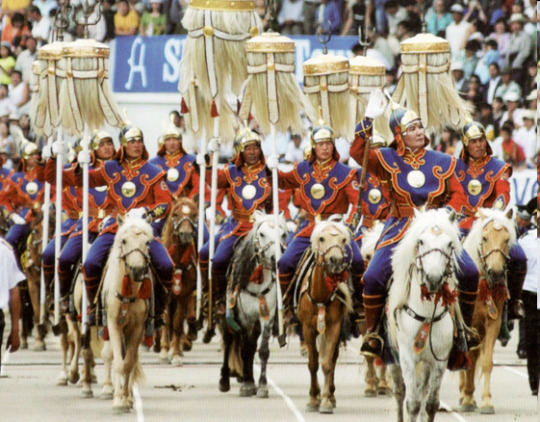
Mongolian riders with Mongolian horses in Naadam parade garb. Traditionally light cavalry, for archers and lancers, or long-distance travel.
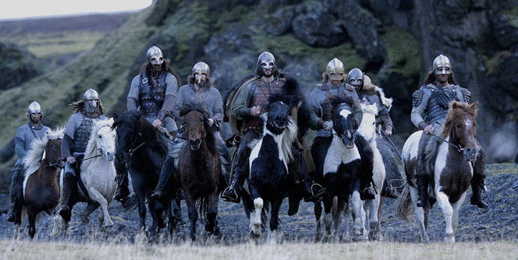
Icelandic riders with Icelandic horses in Viking-type armour, traditionally light cavalry or long-distance travel. They wear chainmail and lamellar armour.
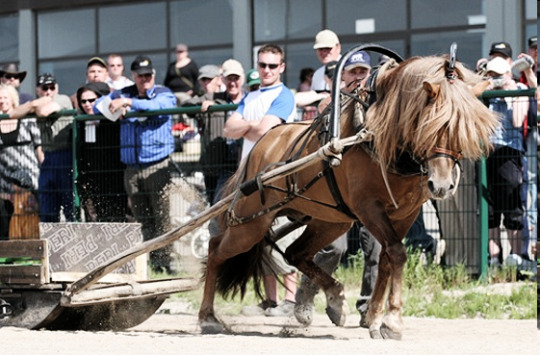
When pulling, horses are even stronger than when carrying. The Finnhorse is not a heavy continental draught, but compared to its size it’s one of the strongest breeds in existence. An average draught horse pulls around 80% of its weight. This is pony-sized (138 cm / 13.2 hh) Finnhorse stallion Vuohimäen Havu, weighing at 340 kg / 750 lbs, and his weight pull record is206% of his own weight. He could haul around another horse twice his size.
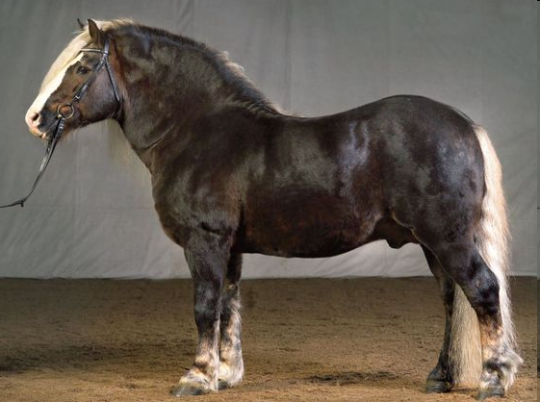
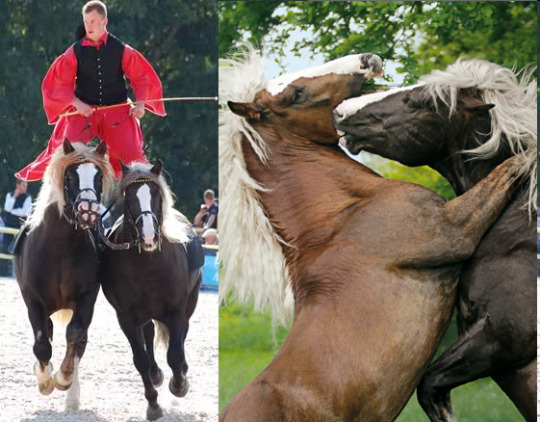
And if we take a heavier continental-type draught horse, for example the Black Forest Horse from Germany (Schwarzwälder), you’ll see that heavy horse doesn’t have to be tall. The average height ranges from only 14.2 hh (pony-sized) to 15.3 hh, and in centimetres that’s 147-160. Still I doubt you could crush one of these tractors even if you tried.
People and horses before you have already tested that. They weigh around 550-640 kg or 1200-1400 lbs. The Finnish stallion above could pull the dead weight of one of these and vice versa.

 Max Armenta's Archive